
Product Center
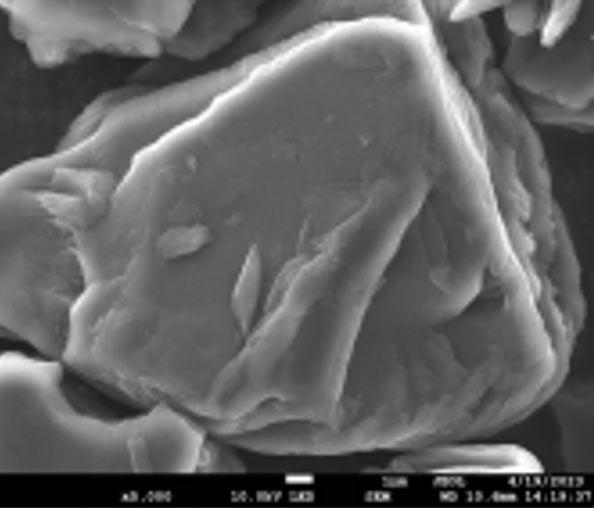
High specific energy artificial graphite
Raw Material Selection
Selecting high-quality needle coke from a massive raw material library, and using Kaijin's unique low-temperature heat treatment technology to improve the surface stability of the material while taking its energy density to the next level.
Particle Reforming Technology
Mechanical polishing of particle surfaces combined with cyclone separation of different particle sizes. Optimize the particle size while optimizing the surface morphology of the particles. Screen out high-energy density particle clusters while ensuring high surface stability.
Ultra-high Temperature Graphitization
The optimization of graphitization power curve and high insulation furnace filling method greatly reduce the heat dissipation of graphite and improve energy utilization efficiency without significantly increasing material consumption.
| Product Model | Energy density | Particle size (D50) | Tap D | SSA | Powder compaction (ST) | Capacity (Cap) | First Effect (ICE) |
|---|---|---|---|---|---|---|---|
| μm | g/cm³ | m²/g | g/cc | mAh/g | % | ||
| KCA037 | ★★★★★ | 15.0 | 1.06 | 1.36 | 2.05 | 359.8 | 93.4 |
| KCA099 | ★★★★★ | 15.7 | 1.04 | 1.93 | 2.09 | 359.4 | 94.0 |
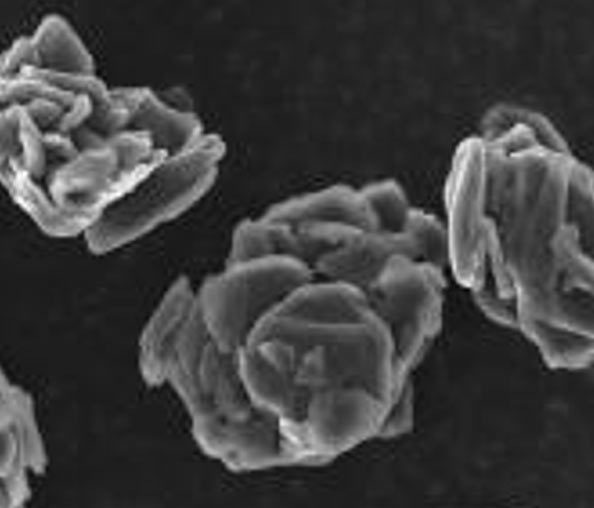
High power artificial graphite
Particle Structure Design
By using aggregate granulation technology, a secondary particle structure is designed to improve the isotropy of powder level particles, reduce the diffusion transport path during lithium ion charging and discharging processes, and enhance the overall charging capacity and rate performance of the battery cell.
Surface Treatment Technology
By coating the surface of negative electrode particles with materials such as soft carbon and hard carbon that have higher ionic conductivity, the electrochemical transfer impedance of the negative electrode is significantly reduced, enabling the battery cell to have stronger charging ability and rate performance.
Excipient Modification Technology
By modifying auxiliary materials (such as asphalt, resin, etc.) such as adjusting composition and changing functional groups, the uniformity of the coating layer can be improved, and the dynamic performance of the coating layer can be enhanced. Empower the 'core' with surging power.
| Product Model | Fast charging capability | Particle size (D50) | Tap D | SSA | Powder compaction (ST) | Capacity (Cap) | First Effect (ICE) |
|---|---|---|---|---|---|---|---|
| μm | g/cm³ | m²/g | g/cc | mAh/g | % | ||
| KCM18 | 4C | 12.3 | 1.07 | 0.95 | 1.88 | 356.5 | 93.8 |
| MT881 | >6C | 8.0 | 1.00 | 1.53 | 1.63 | 348.5 | 93.4 |
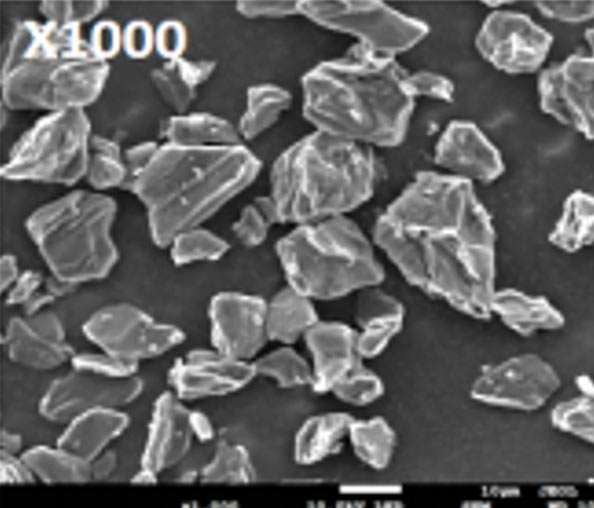
Long life artificial graphite
Raw Material Optimization Selection
Selecting highly isotropic raw materials to prepare small grain low orientation graphite negative electrodes, reducing the intrinsic expansion of graphite, and prolonging the life of battery cells.
Particle Reforming Technology
Mechanical polishing of particle surfaces combined with cyclone separation of different particle sizes. Optimize the surface morphology of particles, reduce the lithium consumption at the interface between graphite and electrolyte throughout the entire lifecycle, and safeguard a long lifespan.
Controlled graphitization technology
The controllable adjustment of the graphitization power curve, combined with the continuous improvement of furnace consistency, enables the graphitization degree of the product to be fully adjustable. The large interlayer spacing under low graphitization conditions can effectively reduce the lithium insertion expansion of graphite materials and lower the solid-state diffusion coefficient of lithium ions, contributing to a longer lifespan.
| Product Model | Cycle life | Particle size (D50) | Tap D | SSA | Powder compaction (ST) | Capacity (Cap) | First Effect (ICE) |
|---|---|---|---|---|---|---|---|
| μm | g/cm³ | m²/g | g/cc | mAh/g | % | ||
| AML920 | >12000cls | 10.6 | 1.20 | 1.59 | 1.84 | 349.2 | 94.1 |
| AML940 | >15000cls | 11.5 | 1.15 | 1.21 | 1.69 | 330.5 | 94.9 |